Prepare
An accountant or finance teammate creates the payment order.


Designing multi-signatory banking for businesses—so complex signing rules, permissions, and next actions stay visible across mobile and desktop.

ABANK primarily served individual customers. The new corporate experience had to support how real businesses prepare, sign, and execute payments.
The challenge was making multiple stages, signatories, thresholds, sequence, permissions, rejection, editing, and failed destination recovery understandable.
An accountant or finance teammate creates the payment order.
The order moves through the company’s signing stages and thresholds.
After the required signatures, the payer completes the transfer.
We interviewed payment order preparers from three companies, reviewed Kilid, and tested the primary prototype flows with the same three participants.

The intermediate design separated configuration and display, but users still had to reconstruct the signing structure in their heads.
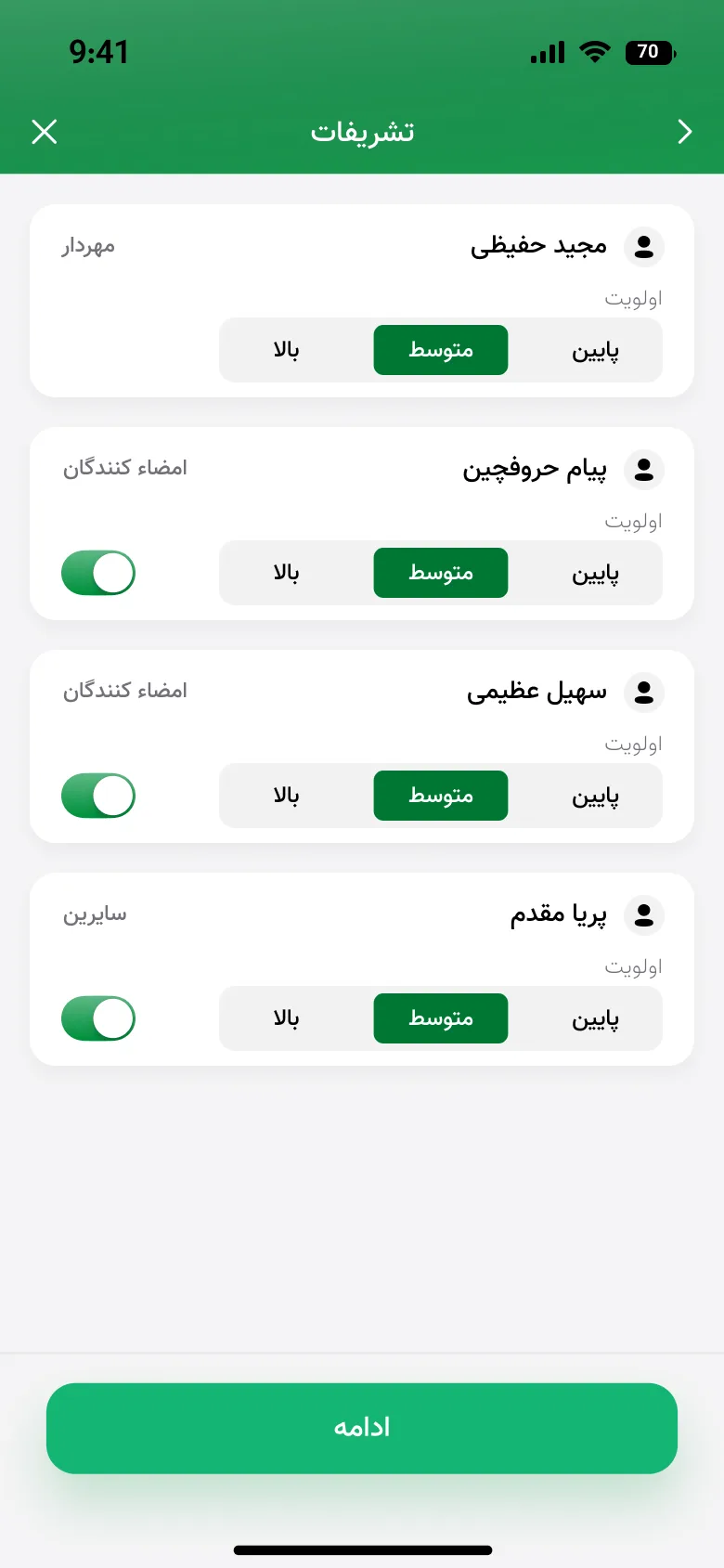
Design decisionWhen a mental model itself is confusing, don’t just add instructions; redesign the interaction so the logic becomes visible.
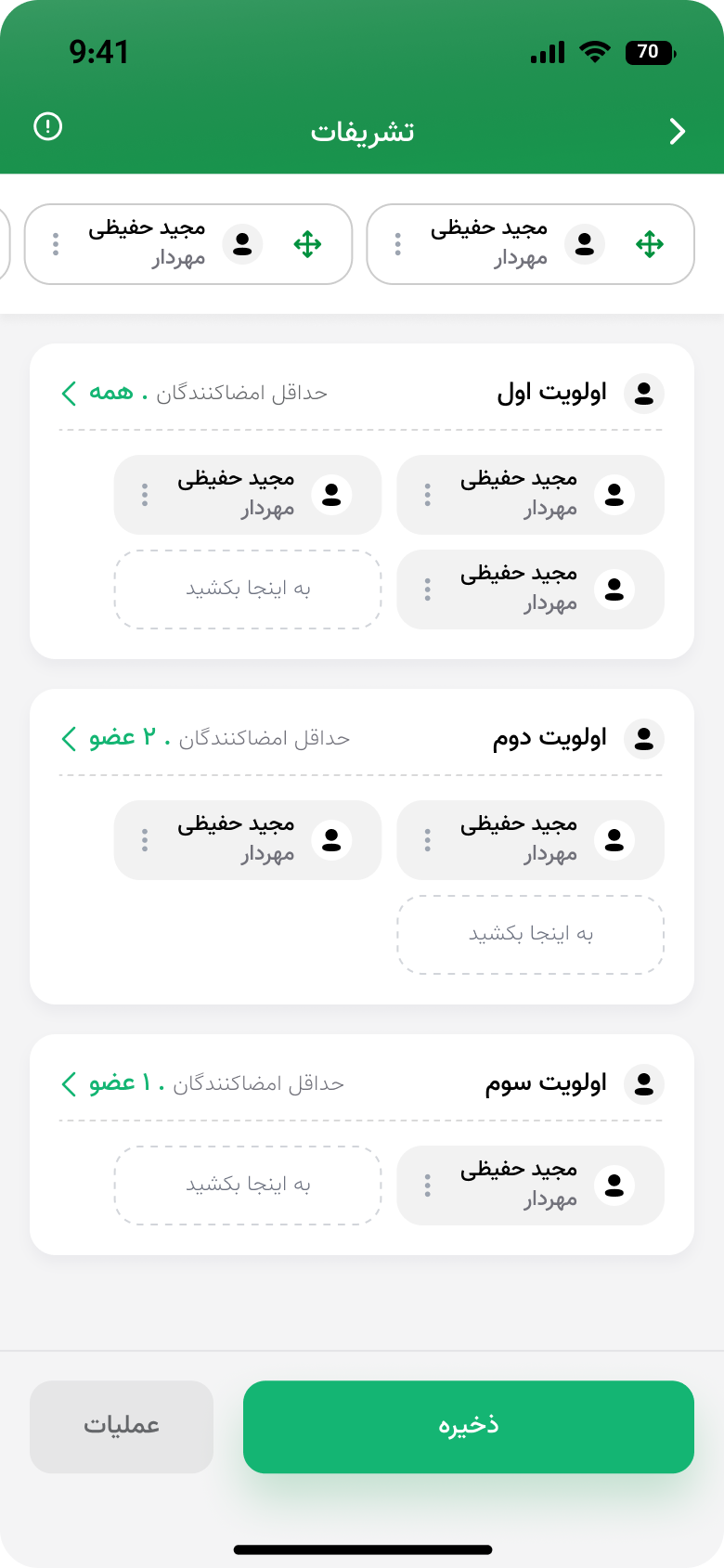
Each group became one approval stage. Signatories became draggable cards and the minimum required signatures stayed visible inside every stage.
Connected mobile and desktop screens were reviewed side by side so terminology, statuses, thresholds, and next actions remained aligned.
Stages, thresholds, and draggable signatory cards use the same product logic on desktop.
Each group is one stage; the required signatures and composition stay visible.
Final signing protocol model and flow, protocol UI, corporate home widget, payment order detail, and signatories bottom sheet.
Reviewed connected mobile and web screens side by side to align terminology, statuses, logic, and next actions.
Status, attachments, signatories, destination, and the available action were brought into one view.

The revised model was retested, received positive qualitative feedback, and was handed off. The product was paused before launch.
Back to selected work